
The only checklist you need to source ghee for your brand
Most brands are unknowingly sourcing adulterated ghee. This article dives into the scientific aspect of pure and adulterated ghee. It will help you build your sourcing playbook.
3/25/20262 min read
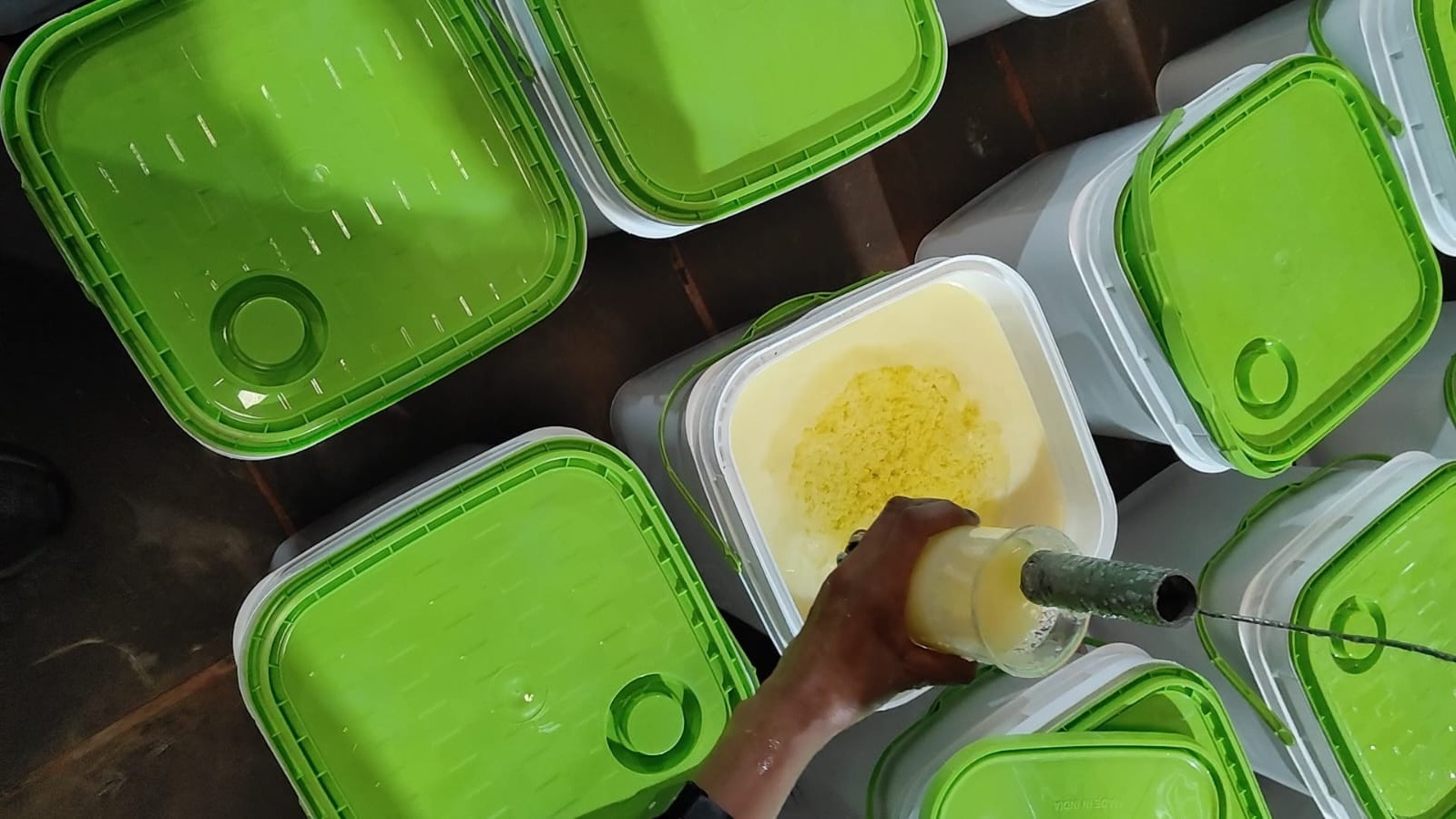
We ordered ghee from all the top D2C brands in India and got them lab tested. To our surprise, > 90% of them failed!
No, brands are not buying cheap. We are working with some of these brands, and we can vouch that the intent of the leaders of these brands are not wrong.
This is what they do to ensure good sourcing. They collect samples from multiple vendors and send them for lab testing. However, what they are unaware of is the parameters that qualify the product as pure. Not being a subject matter expert, they opt for the safest option of getting the samples tested by an NABL certified lab. Some brands employ their team to physically visit the manufacturing setup, however, not knowing what exactly are they supposed to lookout for, in their hunt for the matka-style bilona method!
If you have also 'been there done that' this article has found you well.
Before diving into the checklist that your sourcing team should swear by, lets understand the science behind the lab parameters that will help you benchmark your ghee for purity.
BR (Butyro Refractometer range ~40-43): It is a measure of amount of milk fat present in ghee. The range of BR for milk fat is not exclusive and may overlap with certain animal fats.
RM (Reichert Meissl Value range ~26-35): It is a measure of short-chain volatile fatty acids like butyric acid. Lower RM values indicate adulteration.
WRM (Wash Reichert Meissl): It is again a measure of steam-volatile, water-soluble, alcohol-insoluble fatty acids.
Difference (The difference in RM and WRM should be less than 2): A combination of RM and WRM test values can be used to detect most of the adulteration.
P Value (Polenske Value range ~0.5-2.5): It is a measure of water-insoluble fatty acids. To give a comparison, while lower values indicate adulteration with animal fats and other vegetable fats, higher values suggest adulteration with coconut oil.
Additional lab parameters are as follows.
Moisture: Ensures stability (ideal: <0.3%). Lower moisture prevents spoilage and increases shelf life.
FFA (Free Fatty Acids): Measures freshness (ideal: <0.5%). Lower values mean better handling and longer shelf life.
Brands do not realise that FSSAI guidelines only define a range of specific parameters to detect adulteration: BR (Butyro-Refractometer), FFA (Free Fatty Acids), RM (Reichert-Meissl). Cleverly calculated adulteration can still fall within the permissible range.
The true test of ghee quality lies in fatty acid profiling at the molecular level. Advanced technologies like GC (Gas Chromatography) and NMR (Nuclear Magnetic Resonance) are now being used to detect adulteration with far greater precision.
Only after passing these molecular tests it makes sense to get the BR and RM values tested for benchmarking to assess product quality.
Thus, here is your checklist to source pure A2 ghee:
Is the ghee made from milk?
You need to get real time data reporting of milk sourcing and ghee production throughout the dairy supply chain.Is the ghee pure?
You need to test the ghee batch for fatty acid profiling through GC test.Is the ghee FSSAI compliant?
You need the BR, RM, moisture and FFA values of the ghee from a government certified lab. You must have the updated documents from the facility to keep a check on FSSAI compliance of the facility.
Contact
Reach out for any questions or feedback
CONTACT ON
desk@grandsons.in
+91-9109296662
© 2025. All rights reserved.